

How To Make A Coyote Fleshing Board
Guide 50-101
Revised past Samuel T. Smallidge
Higher of Agricultural, Consumer and Environmental Sciences, New Mexico Land University
Author: Range Comeback Chore Forcefulness Coordinator and Assistant Professor/Extension Wildlife Specialist, Department of Animal Sciences and Natural Resources, New United mexican states Land University. (Print Friendly PDF)
Introduction
Correctly preparing pelts is essential to secure a tiptop market price or to allow for successful tanning. If pelts are to exist sold, information technology is simply skilful business to ready them properly. Compatible training is an of import consideration because pelts are graded by size, quality, and appearance. For those wishing to tan pelts for personal use, pelts must be prepared properly to facilitate a high-quality finished product, whether tanned at home or sent to a commercial tannery. This publication presents procedures and techniques for skinning animals and preparing the pelts for sale or tanning. If you intend to sell your pelts, it is best to cheque periodically with an established fur buyer for preferred methods of skinning and treatment since these may alter. Similarly, y'all should check with the tannery you lot plan to send pelts to if having them tanned commercially.
Near furbearing animals alternate between winter and summer coats. Winter coats provide the creature with added protection from the elements and are thicker and fuller than summer coats. Therefore, the most valuable furs are taken during the colder months. The winter coats of younger animals get prime number (fully developed baby-sit hair and underfur) before in the fall than those of older animals. The fourth dimension frame of when a pelt is virtually marketable varies with species of animal, climate, region, and market conditions. Withal, near furs are thick and marketable past early December even though they may non be fully prime number.
Pull a fast one on and coyote pelts begin to drib in quality and advent during the breeding season, which is unremarkably from late January through February in New Mexico. Bobcat pelts are oftentimes prime as late as April, but status of fur varies considerably by private.
Before harvesting any furbearing brute, information technology is your legal responsibility to know and understand all state rules and regulations regarding harvest, possession, and trade or auction of furbearing animals and their pelts. In New Mexico, a furbearer license is required for residents age 12 and older and all nonresidents to chase, trap, or possess protected furbearers. Protected furbearers (raccoon, badger, weasel, fox, ringtail, bobcat, beaver, muskrat, and nutria) can be harvested only during furbearer season. It is illegal to take black-footed ferret, coatimundi, pine marten, and river otter in New Mexico. Nonresidents too must have a license to harvest unprotected furbearers (skunk and coyote). When using traps to harvest furbearing animals, a Trapper ID number is required. This ID number is provided free by the New Mexico Department of Game and Fish (NMDGF) and can be obtained by calling 505-476-8038. All bobcat pelts are subject area to special tagging requirements and must exist presented to a licensed fur dealer or any NMDGF office within 30 days of harvest for tagging. Information technology is illegal to transport across land lines, barter, sell, or otherwise dispose of any bobcat pelt taken in New Mexico unless it is properly tagged. Furbearers other than bobcat are non subject field to the special tagging requirements.
The NMDGF annually publishes rules, regulations, and flavour dates for hunting and trapping furbearers in the New United mexican states Big-Game & Furbearer Rules & Information. This booklet is available where New United mexican states hunting licenses are sold or online at world wide web.wild animals.land.nm.us. Always stay up to date with the most recent booklet considering seasons and regulations may change periodically. For further information, y'all tin contact the NMDGF state office by phone at 505-476-8000.
Skinning
Many pelts are ruined by waiting also long between harvest and skinning of the animal. Warm atmospheric condition can cause pelts to "taint" (early stages of decay) and hair to "slip" (loosen or autumn out) inside an 60 minutes afterward death, especially if they are exposed to direct sunlight. Therefore, animals should be skinned as soon as possible to prevent deposition or loss of pelts, especially when temperatures are above freezing.
Furbearing animals are skinned either "open" or "cased." Example locations of the cuts for these two methods are shown in Effigy one. In the open method, pelts are removed past cut the skin upwardly the belly from the vent to the chin, then peeling it abroad from the underlying tissue. Cased pelts are removed by cutting the skin upward the back of the hind legs from the feet to the vent. The pelt is peeled back and removed much like removing a pullover sweater. Feet, claws, and tail are removed on some pelts and left attached on others, depending on species. On some, the tail is split on the underside. Buyers, in full general, concur on some techniques. Beavers are traditionally skinned open and stretched into a circular shape with the feet and tail removed, just the legs are non divide. Badgers and raccoons may be skinned open up or cased, but cheque with your buyer to run across what he or she prefers. Muskrats are skinned cased and stretched skin side out. Coyotes, foxes, and bobcats should be cased and stale fur side out.
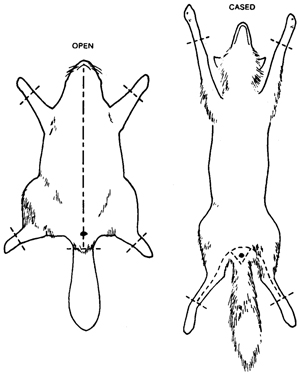
Figure 1. Skinning cuts on open up and cased pelts.
Fur color and quality are two reasons for the varied fashion pelts are sold. Furs such as muskrat carry the same colour throughout the pelt, and the colour tin can be observed on the rump of the pelt. Coyote, fox, and bobcat furs may vary widely in color throughout the pelt, and since color is important in pelt value, these pelts are sold fur side out. Some buyers adopt to have the claws left on larger bobcat pelts so they tin can be mounted as trophies or made into rugs.
Although a knife is needed for merely a few cuts on well-nigh pelts, those cuts will be much easier if the knife is very sharp. When cut through hide, cut from the peel side whenever possible, equally cutting through hair will quickly tedious the knife and make information technology difficult to reach a clean cut. Keep knives sharp, but be careful non to accidentally damage the hide when skinning.
Caution must exist exercised while skinning and handling any furbearing animal since they can carry diseases transmissible to humans. Plague, tularemia, and leptospirosis have been acquired in the handling and skinning of furbearing animals. Other diseases, such as rabies, tin can also be acquired through open up cuts or wounds. Some general precautions that should be taken to reduce risks of exposure and forbid infection are:
-
Wear protective vesture, including plastic, rubber, or latex gloves, when skinning or fleshing.
-
Scrub the work expanse, knives, other tools, and reusable gloves with soap or detergent followed by disinfection with diluted household bleach.
-
Avert eating and drinking while handling or skinning animals, and wash hands thoroughly when finished.
-
Safely dispose of carcasses and tissues as well as any contaminated disposable items such equally latex gloves.
-
Contact a physician if you become sick following exposure to a wild animal or its ectoparasites (e.g., ticks and fleas). Inform the physician of your possible exposure to a wildlife-carried illness.
Skinning Beavers
To skin a beaver, brand a unmarried slit from the base of the tail straight through the vent to the tip of the lower jaw (Figure 1). Be careful not to cut into the body cavity or damage the castor glands on either side of the vent. Cut the anxiety and tail from the carcass at the pilus-line. Considering a beaver's skin is secured firmly to the torso by musculus and gristle, yous will demand to employ a knife to free it from the body as you lot pare it away. Begin skinning forth the initial incision and work toward the back. When skinning the legs, merely piece of work the pelt over the stump of each leg without cut through the hide. With feel, y'all may observe that leaving considerable amounts of mankind on the hide will brand information technology easier to do a neat fleshing job afterwards. Meat left on the hide can provide material to agree onto while fleshing a slippery beaver pelt.
Skinning Coyotes, Foxes, and Bobcats
Coyotes, foxes, and bobcats are non difficult to skin and are amid the almost commonly sold pelts. Skinning is usually easiest if the creature is hung by the tendons of the hind legs at shoulder height. A short rope with a harness snap attached to each end and thrown over a axle is a unproblematic, constructive method of hanging the animate being. Instead of hanging the beast, some skinners adopt to anchor the rope to the bumper of a vehicle.
To peel a coyote, play a trick on, or bobcat for commercial sale, cut the skin from the rear pad of 1 hind foot upwards the back of the leg to the base of the tail, and go on downward the other leg to the rear pad of the other hind foot. There is a fairly singled-out alter in color between the fur on the inner and outer surface of the hind legs. The skinning cuts should follow this color-transition line as closely as possible when cutting forth the back of the leg. Make a brusque cut beyond on the belly side of the vent to leave a pocket-sized triangle of skin, including the vent, on the carcass. Cut around all four legs just in a higher place the feet (except when fur buyers desire anxiety and claws left attached) and piece of work the pelt away from the hind legs and tail. The tailbone tin can be pulled out past mitt or by gripping the tailbone loosely with a pair of pliers, merely a small wooden boning tool (Figure ii) may exist helpful. Figure three demonstrates the use of a boning tool.
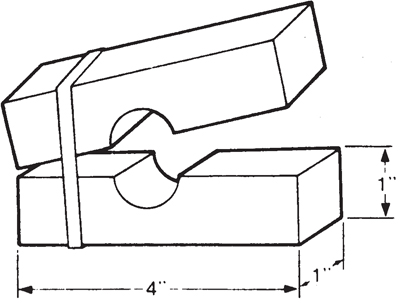
Figure ii. Wooden boning tool.
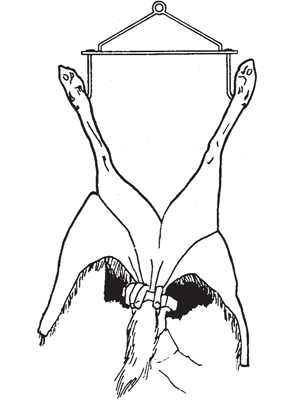
Effigy 3. Skinning tail with boning tool.
A knife is usually needed only for beginning cuts and skinning around the head because pelts can be pulled off easily. Pull the pelt downwardly over the body, the shoulders, and the front end legs to the ears. Cutting the ear cartilage off next to the skull, and advisedly skin out the rest of the head. Be peculiarly careful to avoid cutting holes near the eyes and lips. Leave the olfactory organ and lips attached to the pelt.
Take extreme care when skinning around an area where a bullet or shot entered or left the body. Bullet holes (or holes fabricated accidentally while skinning) should exist sewn shut before final stretching. Dental floss or fishing line can exist used as thread. Be certain the hole is sewn and so there are no bulges and then colors on the fur side are properly matched. The fur of pelts should exist brushed clean either before or after skinning. A equus caballus castor or household scrubbing brush works well for this. Washing may be necessary to remove blood and other foreign material. A high-force per unit area stream from a garden hose works well. The fur side of the pelts should be immune to dry before being stretched, as they may spoil if stretched while wet. This is especially truthful for cased pelts considering the fur side receives niggling ventilation in the first stages of stretching.
Fleshing
Pelts are normally fleshed on a fleshing board, fleshing beam, or stretcher, depending on species and personal preference. A fleshing board is flat, while a fleshing beam is rounded. Both accept tapered points and make fleshing easier by providing a solid base to secure the pelt to for scraping and cut flesh away from the hide. Stretchers, although fabricated for drying pelts, can be used for fleshing some animals by holding the hibernate taut while mankind is cutting away.
Fleshing boards, fleshing beams, and stretchers can be made at home, but beginners may find information technology easier to purchase ane. A broad selection is available commercially through trapping or taxidermy suppliers. These suppliers usually offering a variety of fleshing knives and tools as well. Although a simple knife may work for some fleshing jobs, it may be much easier to use a knife or tool specifically designed for fleshing. If using a fleshing axle, you should use a fleshing knife that is rounded to approximately the aforementioned degree as the beam. By any method, fleshing should remove all possible flesh from the hide before stretching.
Coyote, fox, and bobcat pelts usually crave very lilliputian fleshing and can be fleshed quite easily on a stretcher. Remove excess tissue and fat by cutting, scraping, or pulling it abroad, being conscientious to avoid damage to the skin. Beaver pelts are typically fleshed on fleshing beams, and secured to the beam past clamping the edges of the pelt together under the axle. A two-handed fleshing knife is typically used for beaver because they have a heavy layer of fatty and are generally difficult to mankind. Push the fleshing knife away from your body, working from the head of the beaver downwardly. Scrape every bit much fat and other flesh as possible abroad from the hibernate.
Cornmeal or sawdust rubbed into the flesh side of the pelt and brushed off helps remove oil and fat. This helps preclude grease burn and aids in uniform drying. Flesh and other tissue left on the skin tin can retain wet and harbor bacteria, leading to spoiling of the pelt later on.
If pelts are to be tanned at dwelling house, the fleshing should be specially thorough. Commercial tanneries will mankind pelts for you lot, only pelts must still be cured and fleshed well enough to prevent spoiling before reaching the tannery. Some tanneries may offer discounts if the pelt has been fully fleshed, just check with the tannery first.
After skinning and fleshing, the hide is ready to be cured. Curing can be done past stretching (air drying) or salt curing. The stretching method described below is for pelts that are to exist sold commercially. Common salt curing should be done if the pelt is to be tanned. Along with procedures for domicile tanning, salt curing is described in Cooperative Extension Service Guide L-101, How to Gear up Pelts. (pubs.nmsu.edu/_l/l-101.pdf)
Stretching
For beaver, stretching may be done on a specialized frame, a large lath such as a half sail of plywood, or on an inside wall if in a cool, dry surface area. The round appearance of prepared beaver pelts is achieved past stretching, not skinning. To stretch a beaver pelt on a board or wall, drive four nails through the edge of the caput or upper part of the pelt nearly ane-inch apart. Stretch the pelt lengthwise as tight equally possible and bulldoze several tacks along the bottom edge. Stretch ane side of the pelt out horizontally and tack information technology downwardly, then stretch the other side tight and tack it downwards. Stretch and tack the remaining edge of the hibernate so that it is as close as possible to the shape of a perfect circle, maintaining tautness throughout without overstretching.
Equally a general dominion, cased pelts should be stretched to approximately the same length and width proportions as those of the live animal. Pelts stretched this way are rather long and narrow, the shape preferred in the fur trade. Pelts should exist stretched to approximately the same width at the shoulders and hips. Therefore, stretcher shape and size are important.
The pelt is at present ready for partial drying. Pelts that are to be sold skin side out can exist left in this position to dry thoroughly. Because coyote, fox and bobcat pelts are sold with the fur side out, they must be turned before becoming too dry and brittle. Go out the pelt stretched, peel side out, until the mankind has a glazed appearance and is no longer sticky, but however somewhat soft and flexible (time required varies with temperature and humidity only generally takes near iv to 6 hours at room temperature). Then reverse the pelt and so the fur side is out.
If pelts are not at least partially stale with the flesh side out, they tend to stick to the stretcher and are often badly torn during removal. This is a much greater problem if the stretcher is made from a single solid board, which is non adjustable. In addition, pelts can spoil due to inadequate air apportionment and slow drying during warm and wet weather if they are not partially dried with the flesh side out offset.
The hide should exist tacked at one-inch intervals all the way effectually. It may help to draw a circumvolve on the board a petty larger than the pelt to serve as a guide for stretching. Some of the remaining grease may be removed by scraping after the stretching has been completed. Beaver pelts should remain stretched until fully dry, ordinarily taking near one calendar week.
Cased pelts tin be stretched using wire or wooden stretchers. An array of muskrat stretchers are shown in Figure four every bit an example of the dissimilar types of stretchers bachelor commercially. Stretchers for other species differ in size and shape. Wire stretchers accept the advantage of being piece of cake to use because the hide is hands attached and at that place is little danger of overstretching. It is wise to rub the stretcher with wax before using to forestall the flesh of the pelt from sticking. This is especially of import with thin-skinned animals, such every bit trick. Wooden stretchers tin be purchased or made at abode. Figure 5 provides an example layout for a homemade, adaptable wooden stretcher. The smaller stretcher is sized for fox and bobcat pelts while the larger is for coyotes.
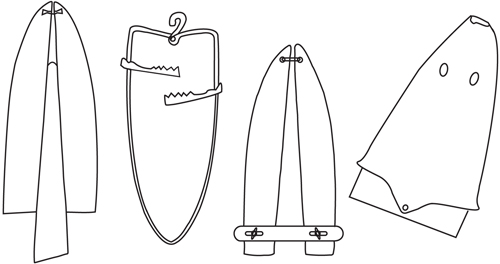
Figure 4. Muskrat stretching frames.
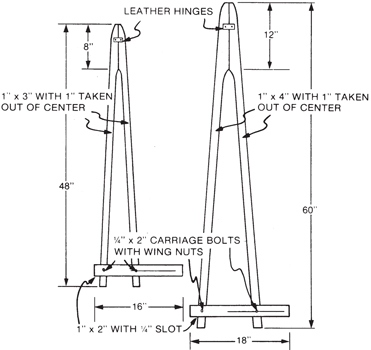
Figure 5. Adjustable wooden stretches. Employ finished (smooth) boards.
Coyote, fox, and bobcat pelts should initially exist stretched skin side out. When using adaptable wooden stretchers (Figure v and similarly designed stretchers), stretching is done in ordered steps: (1) A minor nail on the end of the stretcher holds the nose in identify. (2) Pull the hind legs downward moderately and tack them to the stretcher legs. (3) Pull the lower lip toward the nose and tack it in identify. (4) Loosen the wing nut on the crossbar and slide the stretcher legs apart enough to remove wrinkles in the pelt. (5) Tighten the wing nut to concord the stretcher legs in place, but do not overstretch the pelt since this tends to sparse the fur and decrease pelt value.
To turn pelts, remove them from the stretcher, and begin turning them at the open terminate, working toward the head. If a pelt is non too dry and fragile, it is possible to reach through the open cease, grasp the nose, and turn the fur side out like turning a sock. The front legs should besides be turned and will then dry more thoroughly if cardboard or paper is rolled and placed into them.
After the pelt is turned, the hind legs and lower lip should over again be stretched moderately and tacked in place and the stretcher legs moved out to remove all slack in the pelt. Inserting a 1-inch thick piece of wood into the pelt betwixt the stretcher legs will improve airflow. If using a solid wooden stretcher, you should insert a long, thin wooden wedge between the stretcher and the front side of the hide (after dry, removing the wedge first volition provide some slack for easier removal of the pelt). The tips of the ears can exist pulled forward and tacked down to provide a more than uniform appearance. This also makes dry pelts easier to pack in bales. Pelts should be immune to dry out thoroughly before being removed from the stretcher. This may take several days if the weather is cool and damp. Some people adopt to hang pelts nose side down to dry. This causes the hairs to dry in a more upright position and will make the fur look thicker.
Storing and Shipping Pelts
When dry, pelts can exist removed from the stretcher, brushed over again to improve appearance, and hung by the nose in a cool, dry out place. They should be stored where they will not be exposed to sunlight or directly heat. Also, dried pelts should not exist folded because they are brittle and will break or tear easily.
Many pelts are sold locally, simply it may be necessary or desirable to ship them to buyers, auctions, or tanneries in other locations. Shipping permits are non required in New Mexico, but call back to have bobcat pelts properly tagged (as required by NMDGF) before aircraft. Additionally, you lot should check shipping regulations for the country to which you are shipping pelts. Cheque with a U.S. Customs official before shipping internationally because special regulations apply.
When shipping pelts, exercise not wrap them heavily with newspaper since they may heat and spoil. They should be rolled loosely or stacked fur to fur and skin to skin. Pelts tin can be shipped in a cardboard carton containing holes for ventilation or in a burlap bag. It is all-time to check first with the heir-apparent, sale, or tannery for their preferred method of aircraft. If held for long periods, pelts may spoil or exist damaged past mice, rats, and insects. Every bit a general rule, it is best to sell pelts during the same flavour in which they are taken.
Marketing Pelts
In New Mexico, most pelts sold by trappers or hunters take traditionally been bought past either a resident or traveling fur buyer. Finding a reputable, established fur heir-apparent will help you to secure a fair cost for pelts. You may want to check with local trappers, taxidermists, game wardens, or sporting goods stores since they volition usually know if there are fur buyers in your area. Because fur dealers are required to be licensed when operating in New Mexico, the NMDGF can provide a list of currently licensed New United mexican states fur dealers. To request a re-create of this list, call the NMDGF, Special Permits Department, at 505-476-8064.
Local fur buyers may be hard to discover or not available in your expanse, only in that location are other ways to sell pelts. Some fur buying companies will annunciate in trapping or sportsmen-oriented magazines and will buy pelts through the mail. For those willing to pay a pocket-size committee fee, pelts may also exist sold at auctions sponsored by trapping associations or private fur companies. These auctions are sometimes advertised in trapping magazines or through trappers associations. Although at that place are several ways to sell pelts, utilizing a reputable local fur heir-apparent offers the advantage of establishing a direct relationship with the heir-apparent. A local heir-apparent can offering tips and keep yous up to engagement on preferred methods of pelt grooming.
Prices paid for pelts vary past method of auction, region, market weather condition, and form of pelt. Prices vary past region within New Mexico, primarily because of differences in the natural pelt quality. Too natural variability, the quality and value of pelts are dependent largely upon their preparation. Beginners will probable make mistakes, merely with feel, it will become easier to produce pelts capable of securing tiptop market prices.
A Few Words on Fur Harvest
Since prehistoric times, humans have harvested furbearers for food and clothing (subsistence) or population command (management). The search for fur was the basis for much of the exploration of the American West. Relatively few people depend upon wild fur equally their sole means of support today, but many rely upon sustainable harvest of furbearers to supplement their income. Others only want to savour, utilize, or display a tanned pelt of a furbearer they take harvested themselves. Additionally, those with a demand to implement animal harm command programs (such every bit harvesting beavers that are disrupting private waterways) may offset some of the program costs by correctly preparing and marketing the pelts of harvested furbearers. Well-regulated hunting and trapping provide pleasurable and profitable means of using a renewable natural resource.
Furbearer direction includes elements of sustainable employ, population command, and habitat. And so long as sufficient habitat exists, harvest of many furbearer species can exist used past managers to maintain populations at sustainable and productive levels. Wild fauna managers are broadly trained biologists with a background in the bones sciences, phytology, soils, ecology, and economic science. Their decisions must be based on the best bachelor information. If the resources is to exist maintained for the use and enjoyment of future generations, management decisions cannot be based on whim, political expediency, or emotionalism.
1 emotion-inspired argument against the harvest of furbearers has been its alleged cruelty. Much of that "cruelty" stems from erroneous portrayals of trappers and hunters equally callous, blood-thirsty, and greedy. Yet, this negative image is perpetuated by a very small number of trappers or hunters who are inconsiderate toward regulations and ethics of harvest. Trappers and hunters should strive to harvest furbearers in a humane mode while beingness considerate toward the environment, wild fauna habitat, nontarget wild fauna, human safety, private holding rights, other trappers and hunters, and other uses of our natural resources. The Hunter's Guide, published by the National Rifle Association, and the Trapping Handbook, published past the National Trappers Clan, describe standards of comport that hunters and trappers should follow. Practicing and promoting ethical harvest within the framework of state regulations can help accelerate wild animals direction strategies and convalesce some of the misconceptions almost fur harvest.
References
Boren, J. and B. J. Hurd. 2004. Tanning deer hides and small fur skins [Guide Fifty-103]. Las Cruces: New Mexico State University Cooperative Extension Service, Las Cruces, New Mexico. Guide L-103.
Krause, T. 1984. Trapping handbook: A guide for better trapping. North. Gray, L. Hassler, Yard. Willis, and D. Hoyt (editors). National Trappers Clan, Nacogdoches, Texas.
McLean, R.G. 1994. Wild animals diseases and humans. In Prevention and command of wild animals impairment. Great Plains Agricultural Quango. University of Nebraska, Lincoln, Nebraska.
National Burglarize Association. 1982. The hunter'southward guide. The National Rifle Clan of America, Washington, D.C.
Acknowledgements
A portion of the cloth in this publication was adopted from the New United mexican states State University Cooperative Extension Service Circular C-490, Fur Harvest and Pelt Training (no longer in apportionment). The authors would similar to thank Jeff Lehmer, the New Mexico Trappers Association, and Bill Dunn of the New Mexico Department of Game and Fish, for reviewing this publication.
Original author: James East. Knight, Extension Wildlife Specialist. Previously revised by Jon Boren, Extension Wild fauna Specialist, and Brian J. Hurd, Extension Inquiry Specialist.

Sam T. Smallidge is the Extension Wildlife Specialist at New Mexico State University. He has degrees in wildlife and range management. His Extension plan focuses on wild fauna impairment management, wild fauna enterprises, and wildlife environmental and direction education for youth and adults.
To observe more resources for your business concern, home, or family, visit the College of Agricultural, Consumer and Environmental Sciences on the World Broad Web at pubs.nmsu.edu.
Contents of publications may be freely reproduced for educational purposes. All other rights reserved. For permission to use publications for other purposes, contact pubs@nmsu.edu or the authors listed on the publication.
New Mexico State University is an equal opportunity/affirmative activeness employer and educator. NMSU and the U.S. Department of Agronomics cooperating.
Revised and electronically distributed September 2012, Las Cruces, NM.
Source: http://pubs.nmsu.edu/_l/L101/
0 Response to "How To Make A Coyote Fleshing Board"
Post a Comment